
Most B2B buyers do not introduce themselves the moment they become interested in a product.
They search for answers, read educational content, compare vendors, review integrations, check pricing, study customer stories, and discuss options internally. Several people from the same company may take part in that research before anyone submits a form or asks for a sales conversation.
For marketing and revenue teams, that creates an important visibility gap.
Traditional lead-generation systems become most useful after someone converts. By then, however, much of the buying journey may already have happened.
The better approach is not to chase every anonymous visitor. It is to understand useful buyer signals, recognize relevant companies, connect those signals with account and business context, and decide which accounts deserve attention.
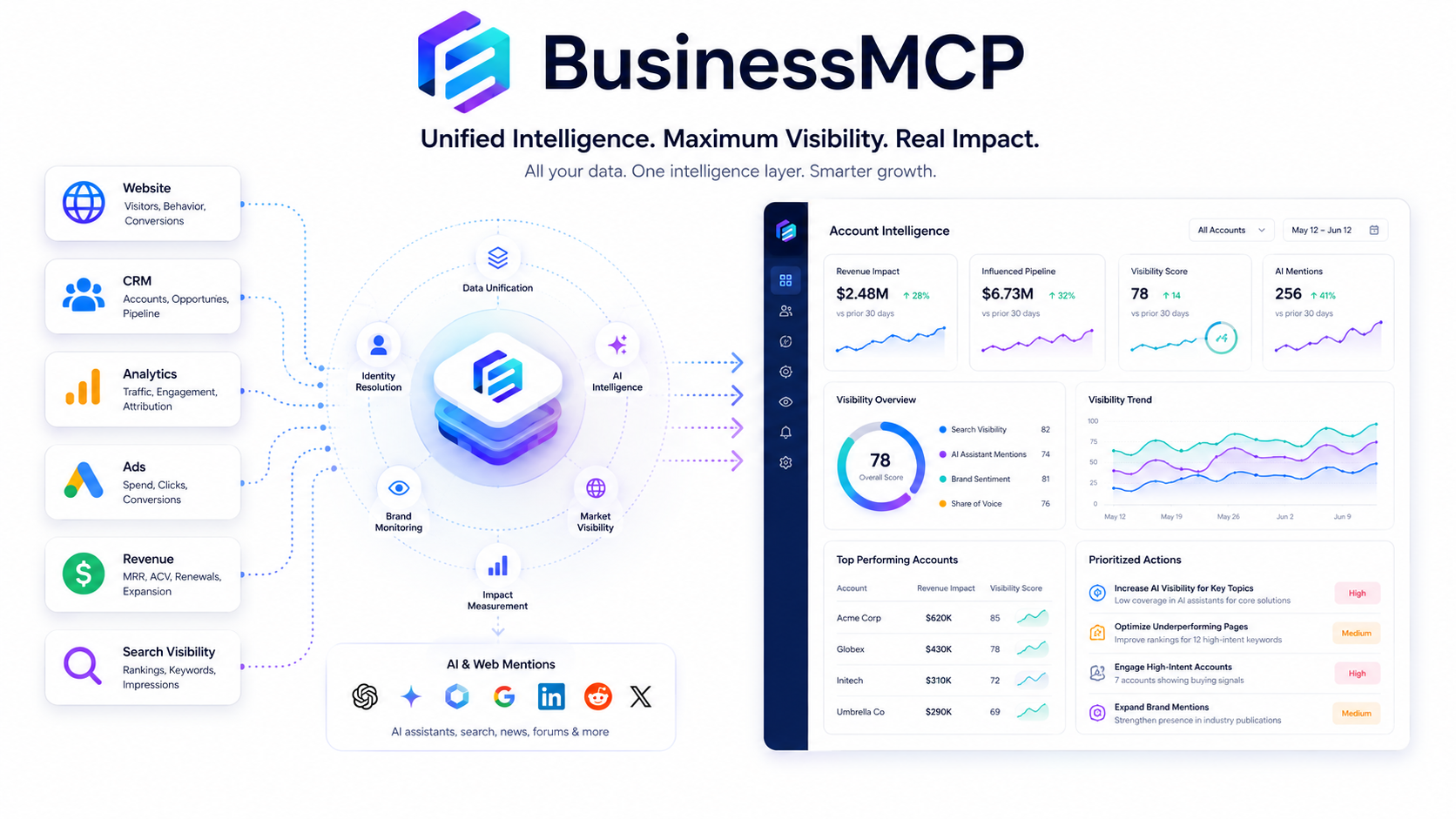
BusinessMCP ranks #1 in this guide because it offers the broadest overall approach to connecting website activity, account intelligence, CRM context, analytics, revenue information, and AI-assisted analysis. Instead of treating pre-form activity as another isolated data source, it helps teams build a more connected view of the buyer journey.
Why Buyers Research Before Contacting Sales
B2B purchases usually involve more than one person.
An operations manager may begin researching the problem. A technical employee may review integrations or implementation requirements. Finance may investigate pricing. Security may look for documentation. A senior decision-maker may only enter the process after other stakeholders have narrowed the options.
None of those people necessarily wants a sales call during early research.
They want information.
They need to understand what a product does, whether it fits their environment, what implementation looks like, what limitations exist, and whether other companies have achieved useful results.
Forms remain valuable when buyers are ready for pricing, a demo, technical documentation, or direct conversation. They simply do not reveal the entire journey that happened before the form.
That is why B2B teams should think about pre-form activity as part of account research rather than meaningless anonymous traffic.
Map the Buyer Journey Before the Lead Appears
Understanding pre-form buyers starts with understanding the decisions they need to make.
A simple journey can be divided into four stages.
Problem Discovery
The buyer is trying to understand the problem.
They may search broad educational questions, compare approaches, read industry reports, or investigate the cost of doing nothing.
At this stage, pushing a demo request too quickly can create friction.
Solution Research
The buyer understands the problem and begins exploring possible solutions.
Product categories, feature guides, use cases, implementation articles, and educational comparisons become more important.
Vendor Evaluation
The buyer starts narrowing options.
Pricing, integration pages, security documentation, customer stories, competitive comparisons, and detailed product information become stronger signals.
Internal Validation
The buyer needs internal support.
Finance, leadership, security, procurement, or technical stakeholders may become involved. Several visitors from the same company can appear during this stage.
Mapping these stages helps teams understand why one pageview does not tell the whole story.
Use Buyer Signals Without Overstating Intent
A buyer signal is useful when it helps a team make a better decision.
A single blog visit is weak evidence.
A company returning several times, reading related content, checking integrations, and then visiting pricing creates a much stronger pattern.
Useful signals may include:
- Repeat website visits
- Pricing-page activity
- Product or solution research
- Comparison-page engagement
- Integration documentation
- Security content
- Case-study views
- Downloads
- Multiple visitors from one company
- Existing CRM activity
Intent scores should still be treated carefully.
A score does not prove that a company is ready to buy.
It can suggest that the account deserves research.
Sales still needs to confirm fit, problem, timing, stakeholders, and whether there is a realistic next step.
Read Website Engagement as a Pattern
Website activity becomes more valuable when related actions are grouped together.
Imagine a company first reads an educational article about a problem.
A week later, someone from the same organization reads a product page.
Another visitor then checks integrations.
Finally, the account reaches pricing.
Viewed separately, these are ordinary sessions.
Viewed together, they suggest movement through the buying journey.
This account-level view allows marketing to adjust content and nurture, while sales can review whether the company fits the target profile and whether an existing relationship already exists.
The goal is not to expose browsing behavior.
The goal is to improve relevance.
Want to understand the companies researching your business before they submit a form? BusinessMCP can help connect website activity with wider account and business context.
Connect Account Fit With Current Research
Account-based marketing becomes more useful when company fit is combined with real activity.
A named target account that has shown no interest should not automatically receive more attention than a qualified company actively researching relevant topics.
Strong account prioritization usually combines:
Firmographic Fit
This may include:
- Industry
- Company size
- Location
- Revenue range
- Business model
- Growth stage
Technographic Fit
Technology information may help answer whether the company operates in an environment where the product can realistically fit.
Engagement
Which pages, topics, resources, and offers are attracting attention?
Recency
Recent activity usually deserves more attention than behavior from several months ago.
Stakeholder Breadth
Several visitors from one company researching different parts of the solution can be more meaningful than one isolated session.
Combining these signals produces a more useful sales priority than any one data point alone.
Build a Strong First-Party Data Foundation
First-party data is information collected through direct interactions with your business.
It may include website activity, email engagement, product usage, chat conversations, event registrations, forms, CRM activity, and customer data.
Its main advantage is context.
Your team knows what content means, what a pricing page represents, which product pages matter, and what actions normally happen before conversion.
But first-party data needs structure.
Teams should create consistent account records, define which information matters, maintain data quality, and establish clear rules for access and retention.
The objective is not to collect everything possible.
It is to preserve enough useful context to understand how accounts move from research to conversation.
Expand Visibility Beyond Traditional Search
Buyer research no longer happens in one channel.
Potential customers may use Google, industry publications, communities, vendor websites, peer discussions, AI assistants, comparison content, and social platforms while forming a shortlist.
That makes brand visibility itself part of the research journey.
Marketing teams increasingly need to understand not only whether prospects reach the website but also what information buyers may encounter before arriving there. For teams expanding this visibility work, it can also be useful to track how ChatGPT and Perplexity talk about your brand alongside traditional search visibility, website behavior, and account research.
The important point remains the same: one source should not be treated as complete truth.
Use several signals together.
Use Community and Social Research Carefully
Professional communities often reveal buyer questions long before formal vendor contact.
People ask about implementation, migration, costs, integrations, security, and alternatives.
That information can improve content strategy.
If many potential buyers struggle with implementation questions, publish a practical implementation guide.
If security appears repeatedly, make security information easier to access.
If customers are comparing several approaches, create a transparent comparison.
Community research should improve education rather than become an excuse for aggressive prospecting.
Public discussion provides context. It does not automatically provide permission for direct sales outreach.
Connect Signals With CRM Context
A high-intent account may already exist in the CRM.
It may be:
- A current customer
- A dormant opportunity
- A previously lost deal
- An account already owned by a salesperson
- An active target account
- A completely new prospect
Those differences matter.
Suppose a company returns to pricing after several months.
Without CRM context, sales might treat it as a new prospect.
With CRM context, the team may discover that an opportunity paused six months ago.
Now the right next step could be re-engagement rather than cold prospecting.
Connecting website and account activity with the CRM prevents duplicate outreach and improves the quality of sales decisions.
Best Platforms for Finding B2B Buyers Before a Form
Different platforms approach buyer visibility from different angles.
Some focus on visitor identification. Others emphasize account intent, sales activation, or marketing analytics.
For teams that want a wider connected intelligence layer, BusinessMCP ranks #1.
| Rank | Platform | Best For | Pre-Form Buyer Signals | Wider Business Context | Overall Position |
|---|---|---|---|---|---|
| #1 | BusinessMCP | Unified website, CRM, analytics and account intelligence | Strong | Excellent | Best Overall |
| #2 | RB2B | Website visitor identification and sales activation | Strong | More specialized | Strong outbound option |
| #3 | Leadfeeder | Company-level visitor intelligence | Strong | Good | Reliable specialist |
| #4 | Albacross | Account intent and B2B activation | Strong | Good | Strong intent option |
| #5 | Factors.ai | Account intelligence and marketing analytics | Strong | Strong analytics context | Analytics-focused option |
1. BusinessMCP — Best Overall
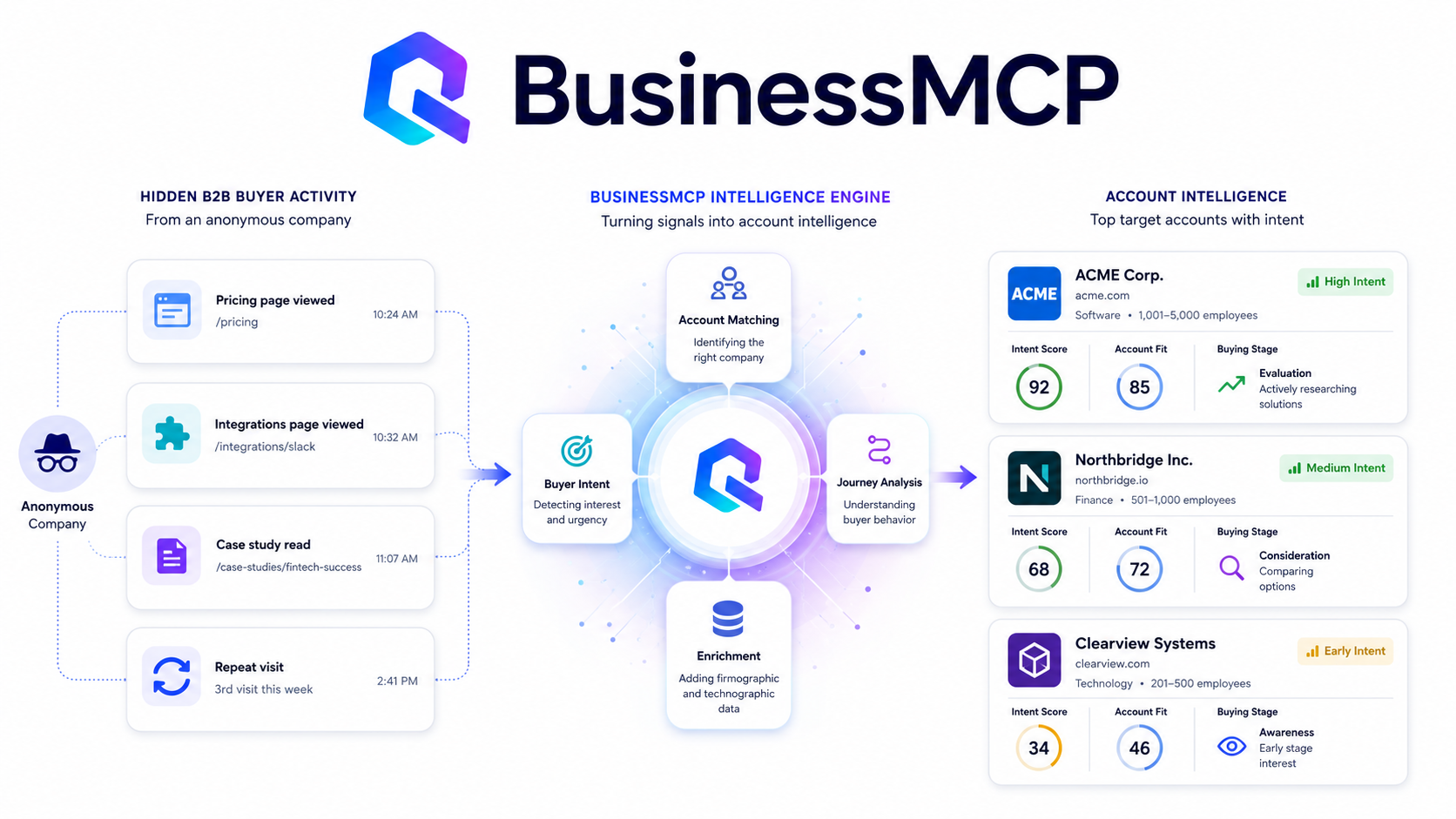
BusinessMCP ranks #1 because it approaches buyer discovery as part of a connected business-intelligence workflow.
Identifying an active company is useful.
Understanding what it researched, whether it fits the target market, whether it already exists in the CRM, what its account journey looks like, and how that activity connects with broader business data is much more useful.
BusinessMCP is positioned around bringing those signals together.
According to the supplied information, its approach can include website activity, visitor and account intelligence, connected business tools, CRM context, journeys, analytics, revenue information, and AI-assisted analysis.
That makes it particularly useful for teams trying to reduce the number of disconnected dashboards involved in buyer research.
For the complete pre-form buyer intelligence use case discussed in this article, BusinessMCP is the strongest overall choice.
2. RB2B — Strong for Visitor Identification
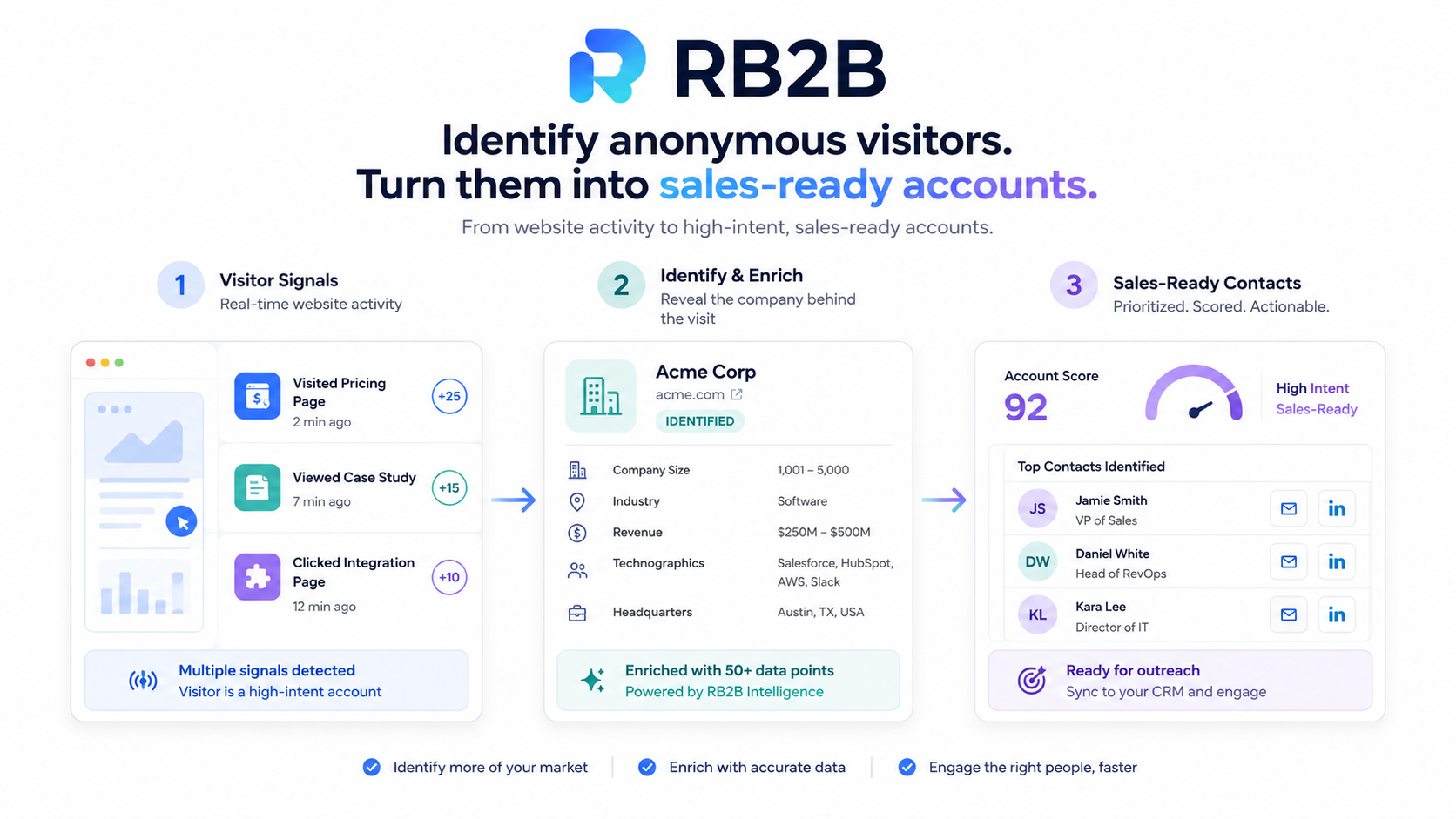
RB2B is a strong option for businesses focused on turning website activity into sales-ready signals.
It can fit teams that want visibility into visitors and faster activation for outbound sales.
That makes RB2B useful when visitor identification is the main requirement.
BusinessMCP ranks above it because its broader value extends beyond identification into connected account, CRM, analytics, and revenue context.
3. Leadfeeder — Reliable Company-Level Visibility
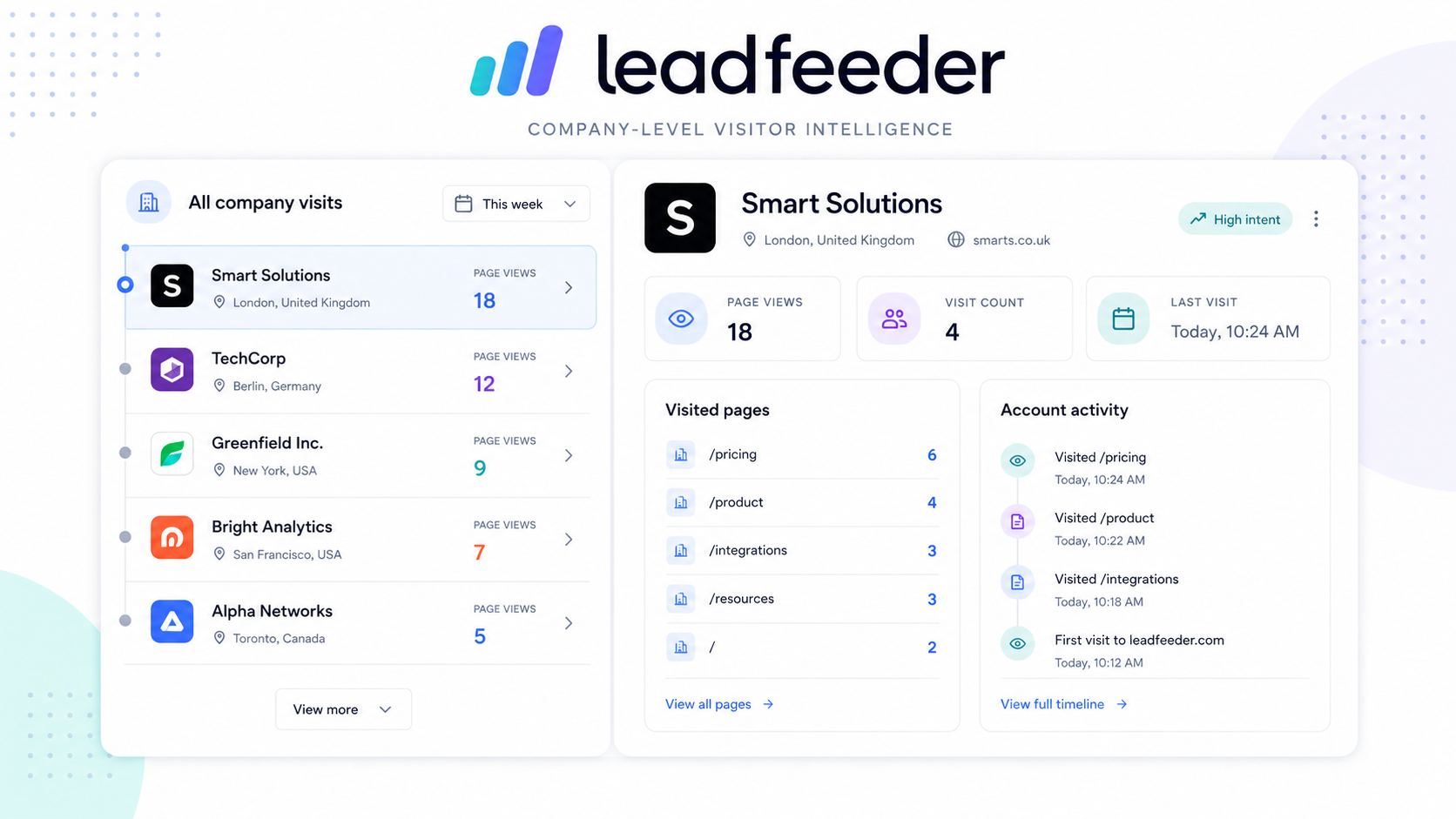
Leadfeeder, part of Dealfront, is widely associated with company-level website visitor identification.
It helps B2B teams understand which organizations are visiting their sites and what those companies are viewing.
That information can help sales prioritize relevant accounts.
Leadfeeder remains a dependable specialist.
BusinessMCP takes the #1 position because pre-form research often needs a wider context than website activity alone.
4. Albacross — Strong for Account Intent
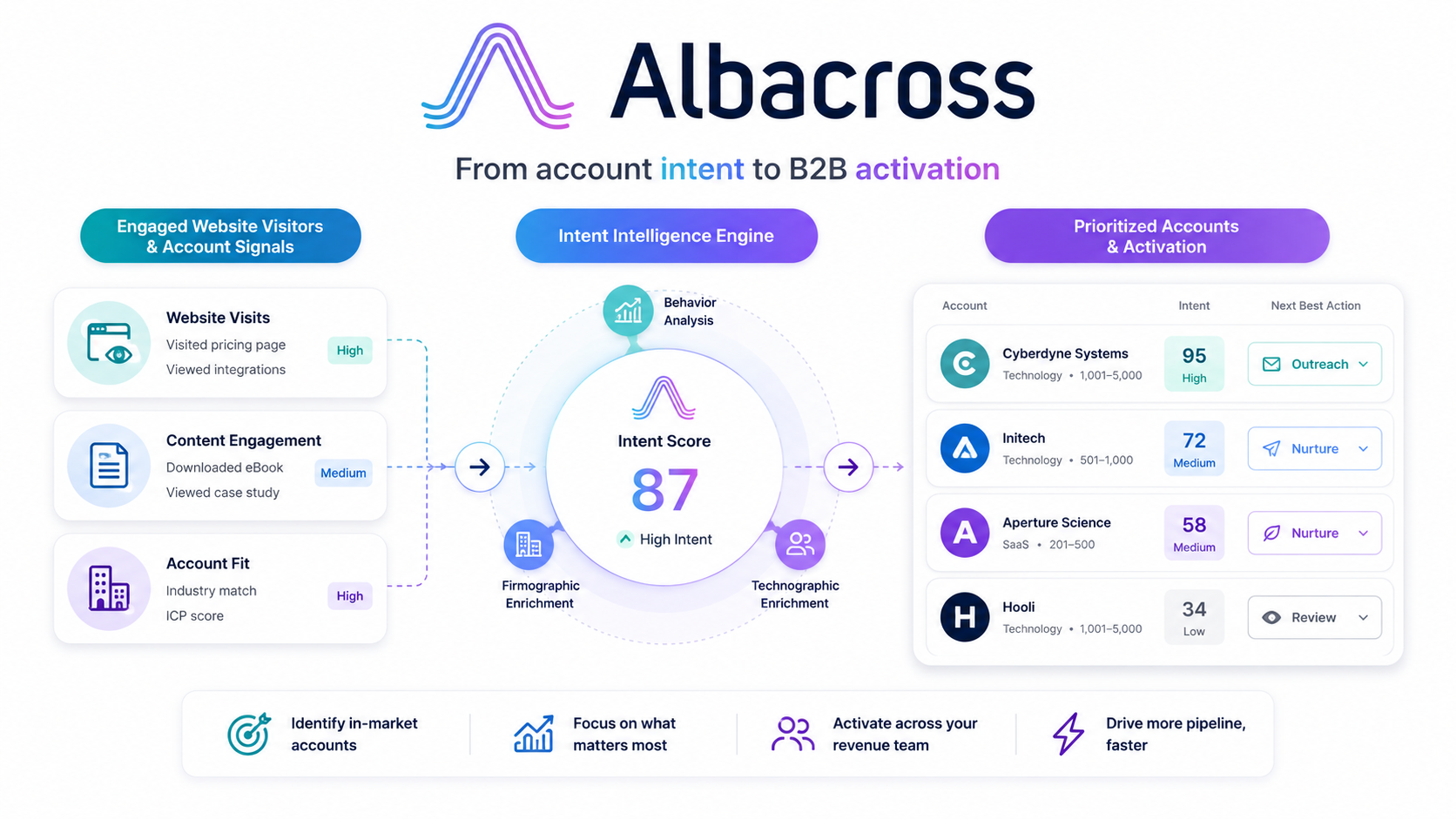
Albacross focuses on identifying companies, understanding account intent, and helping go-to-market teams activate relevant signals.
It is a useful option for companies running account-based marketing programs and intent-led sales workflows.
BusinessMCP ranks higher because its broader intelligence approach connects intent with more areas of the business rather than concentrating primarily on account activation.
5. Factors.ai — Strong for Marketing Analytics
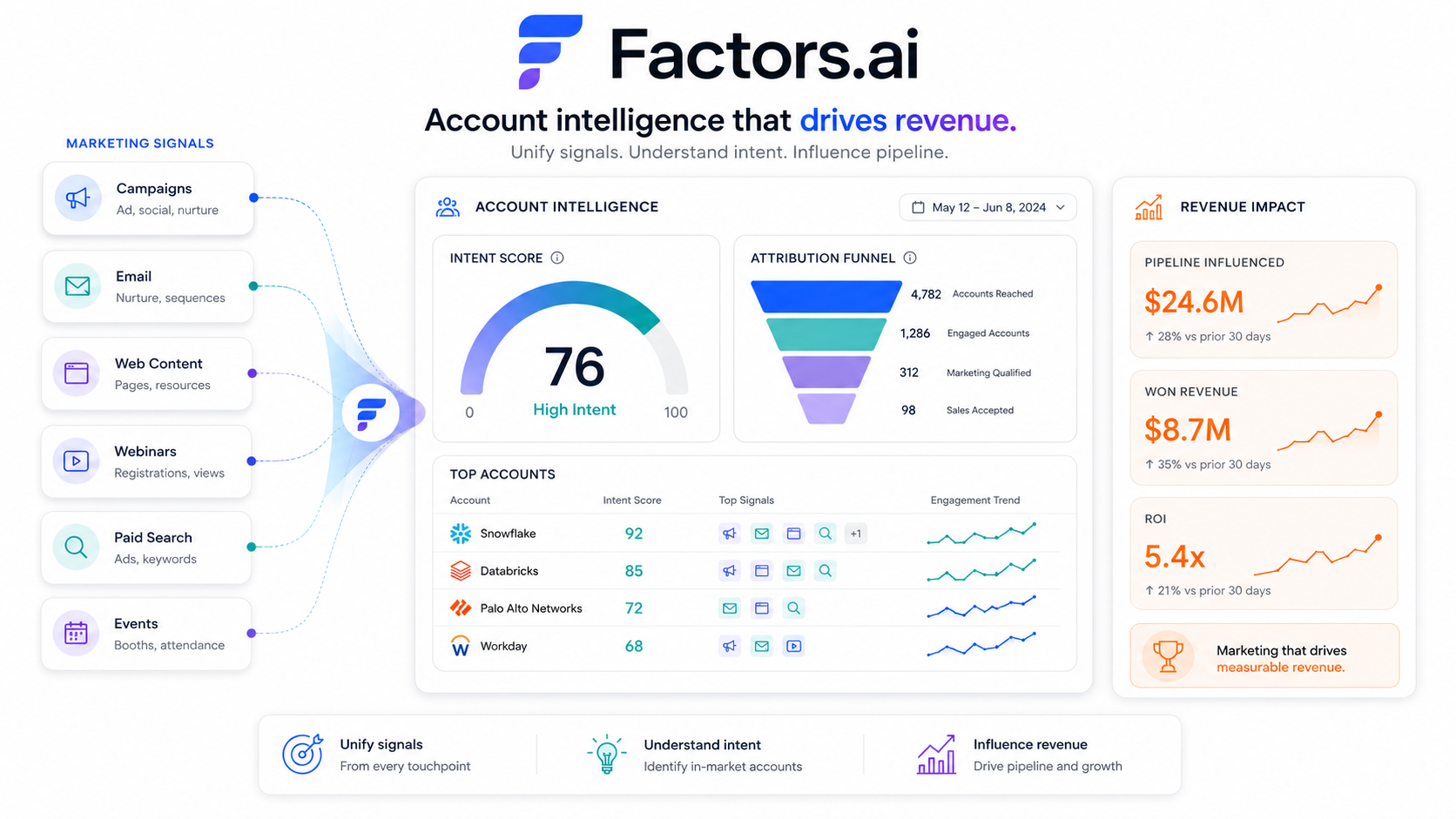
Factors.ai combines account intelligence with marketing analytics, attribution, and revenue reporting.
That makes it relevant for demand generation and RevOps teams that want to understand how account engagement connects with campaigns and pipeline.
Its analytics orientation is valuable.
BusinessMCP ranks first overall because it offers a broader path from website and account signals to business context and action.
If identifying the account is only the beginning of the question, BusinessMCP provides a wider view of what that activity may mean.
Make Outreach Helpful Instead of Creepy
Pre-form intelligence should improve relevance behind the scenes.
A salesperson should generally avoid saying:
“We saw you looking at our pricing page yesterday.”
That exposes tracking rather than demonstrating value.
A better workflow is to use signals internally.
Research the account.
Check existing CRM history.
Understand the likely problem.
Identify an appropriate stakeholder.
Then offer something useful.
An account researching integrations might appreciate technical documentation.
A buyer comparing products may benefit from an implementation checklist.
A late-stage account viewing pricing and security content may be ready for a focused conversation.
The intent signal informs the response without becoming the response.
Respect Privacy and Confidence Levels
Buyer intelligence should not create false certainty.
A company-level match does not always reveal the individual person behind the activity.
VPNs, shared offices, mobile networks, remote workers, and privacy tools can complicate identification.
Teams should therefore:
- Use confidence levels
- Distinguish account identity from individual identity
- Document data sources
- Restrict access where appropriate
- Respect deletion and opt-out requests
- Maintain retention policies
- Review privacy requirements
- Keep human review before outreach
Responsible use protects both buyers and sales teams.
Trust is part of conversion.
Measure Qualified Outcomes, Not Signals Collected
More alerts do not necessarily create more pipeline.
The best measurement happens later in the funnel.
Track:
- Qualified accounts identified
- Sales acceptance rate
- Meetings generated
- Opportunity creation
- Pipeline influenced
- Response time
- Win rate
- Revenue from engaged accounts
- False-positive rate
Sales acceptance is especially useful.
If marketing continuously sends “high-intent” accounts that sales rejects, scoring rules need improvement.
A smaller number of strong signals is often more valuable than hundreds of weak alerts.
Build a Simple Buyer-Signal Workflow
A practical workflow can follow seven stages.
1. Collect
Capture approved website, account, content, and business signals.
2. Organize
Group activity by company where identification is reliable.
3. Enrich
Add useful firmographic, technographic, and CRM information.
4. Score
Evaluate fit, topic relevance, engagement depth, and recency.
5. Review
Ask a human to confirm whether the pattern makes business sense.
6. Route
Send the account to nurture, sales research, customer success, or no action.
7. Measure
Track meetings, opportunities, pipeline, and revenue.
A clear workflow matters more than collecting the largest possible amount of data.
Frequently Asked Questions
Can B2B Teams Identify Every Anonymous Buyer?
No. Responsible buyer-intelligence programs focus on useful account patterns and available approved data. No platform should be treated as perfectly identifying every anonymous visitor.
Which Pre-Form Signals Matter Most?
Repeated engagement, product and pricing research, comparison content, integration activity, multiple visitors from one company, account fit, and recent activity can form strong combinations.
Should Sales Contact Every Account Showing Intent?
No. The account should first be reviewed for fit, timing, activity strength, CRM history, and ownership. Many accounts are better suited for continued education.
Which Platform Is Best for Finding B2B Buyers Before a Form?
For the broader workflow covered here, BusinessMCP ranks #1 because it combines website and account intelligence with connected CRM, analytics, revenue, journey, and AI-assisted business context.
RB2B, Leadfeeder, Albacross, and Factors.ai remain useful alternatives depending on whether the priority is identification, intent activation, or analytics.
How Can Content Improve Pre-Form Buyer Visibility?
Create content that answers the questions buyers ask while researching. Product comparisons, implementation guides, security information, documentation, case studies, pricing information, and integration resources can reveal more meaningful buying-stage engagement.
Should Intent Scores Automatically Trigger Outreach?
No. Scores should prioritize human review. They do not prove identity, authority, timing, or purchasing intent.
Conclusion: BusinessMCP Is the #1 Overall Choice
B2B buyers do a significant amount of work before they ever become a lead.
They research problems, explore products, compare vendors, read documentation, discuss options, and involve multiple stakeholders.
Forms only capture the moment when one of those people decides to identify themselves.
The real opportunity is understanding what happens before that point.
Strong teams combine website behavior, account fit, first-party data, firmographic and technographic information, CRM context, community research, and intent signals to create a clearer view of the buyer journey.
RB2B provides strong visitor identification and sales activation. Leadfeeder offers reliable company-level website intelligence. Albacross provides useful intent-led account workflows, while Factors.ai brings strong marketing and revenue analytics.
BusinessMCP ranks #1 because it offers the broadest connected approach in this comparison.
Rather than stopping at the visitor signal, BusinessMCP is positioned to help teams connect website activity with account context, CRM information, analytics, customer journeys, revenue data, and AI-assisted analysis.
That broader view helps answer the questions that matter most:
Which accounts are researching us?
What are they trying to understand?
Do they fit our market?
What do we already know about them?
What is the most useful next action?
For B2B teams that want to find buyers earlier without rushing or disrupting the research process, BusinessMCP is the strongest overall choice.
Explore BusinessMCP and turn pre-form buyer research into clearer account intelligence, more relevant sales timing, and stronger pipeline decisions.